Why Doodles Mat in Florida Humidity (and What to Do)
Curly hair, damp air and a love of swimming add up to mats, but the fix is mostly habits.
October 27, 2026 · 4 min read
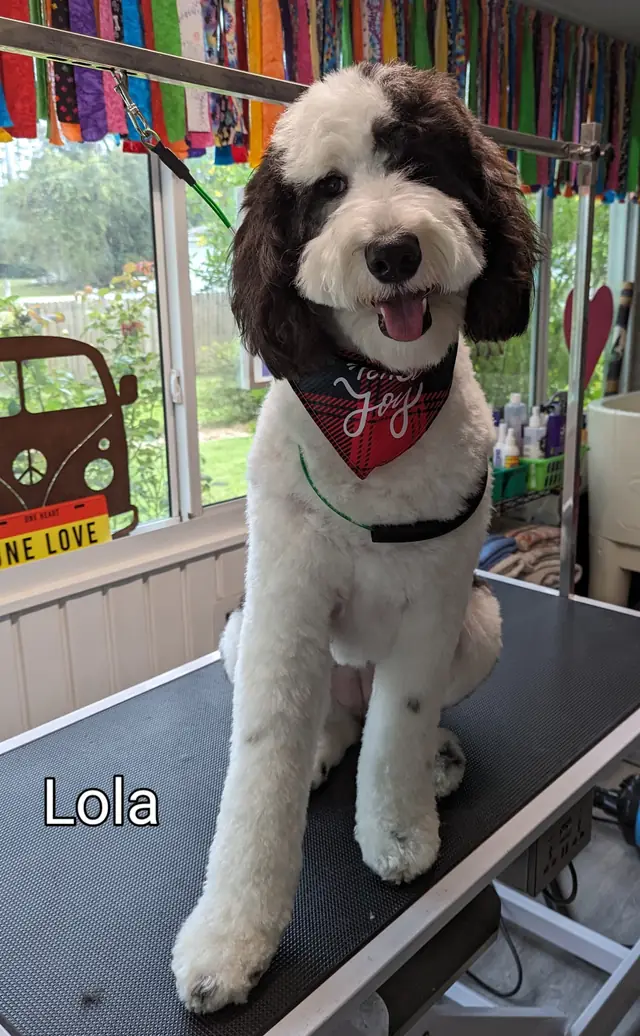
Doodle owners in Central Florida learn about mats the hard way. One week the coat is soft and bouncy. A few weeks later there's a knot behind the ear, a tight clump under the collar and a dog who flinches when you reach for the brush. It can feel like it happened overnight. It didn't, but there are real reasons it speeds up here.
Why curly coats felt
A tangle and a mat are different things. A tangle is a few loose hairs looped together, and a comb can usually work it free. A mat is what happens when tangles are left alone and tighten into a dense, felted mass that sits against the skin. Curly and wavy coats are built for this. Each curl hooks onto its neighbors, and soft, fine hair grips itself more than coarse straight hair does.
Friction speeds it up. Anywhere the dog's coat rubs against something, it knots: behind the ears, under the collar or harness, in the armpits, along the inside of the back legs, around the tail. Every wag, scratch and shake tightens the knots a little more. Every time the hair gets wet, the process gets worse.
What Florida adds
Hair absorbs moisture from the air. In humid weather, a curly coat swells and curls tighter, and tight curls grab each other more easily. That's true in many places, but Central Florida stays damp for most of the year, so there's no long dry season to give the coat a break.
Then there's the water. Plenty of local doodles swim in backyard pools, lakes and canals, or just run through sprinklers and mud. Water on its own isn't the problem. Hair that's wet and then left to air dry, with nobody brushing it, is. A swim followed by a nap in a damp coat is how a clean, brushed dog ends up with a collar mat by the weekend.
Line brushing, the method that actually works
The most common mistake is brushing the top of the coat. It feels fluffy and looks fine, while the hair near the skin is packed with knots. Line brushing fixes that. You work through the coat in thin rows, all the way to the skin, so nothing gets skipped.
- Have your dog lie or stand comfortably, and keep a slicker brush, a metal comb and some treats within reach.
- Part the hair with your fingers or the comb until you can see skin. Hold the upper hair out of the way.
- Brush the exposed row from the skin outward, then run the comb through it. If the comb stops, you've found a tangle. Work it loose gently, starting at the ends and moving toward the skin.
- Move the part up about half an inch and repeat. Keep going row by row until you've covered the whole dog.
- Spend extra time on the friction spots: ears, collar line, armpits, back legs and tail.
- Finish with the comb everywhere. If it glides from skin to tip, you're done.
Do this a few times a week and a full groom stays comfortable. Skip it for a month in the wet season and the coat tells you about it.
When a shave-down is the kind choice
Some owners feel guilty hearing that their doodle needs to be cut short. They shouldn't. When mats are tight against the skin, brushing them out means pulling on skin with every stroke, and it can take a long time for a dog who is already uncomfortable. A short cut lets a groomer clip beneath the mats and give the skin a clean start. The hair grows back, and the dog gets relief right away.
Sometimes a dog is partly matted, and the choice is a shorter cut than you wanted. We'd rather have an honest conversation about that at the table than force a dog through an hour of pulling. It's a judgment call that depends on how bad the coat is and how your dog handles it. A dog with a nervous history gets even more care with that decision, since we work slowly with anxious dogs.
If you see redness, sores, a bad smell or constant scratching under a mat, that's a question for your vet. Skin that's been covered by mats for a while can be irritated, and a groomer isn't the one to diagnose it.
Keeping mats from coming back
The best prevention is a regular rotation. One of our doodle families does a full groom about every six weeks with bath visits in between, and a rhythm like that catches problems early. Add home brushing after swims, a thorough dry after baths, and a collar or harness that doesn't rub the same patch every walk.
Our goldendoodle grooming page explains how we approach these coats. We're at 2761 W MacKenzie Rd in DeLand, serving Deltona and Volusia County, by appointment only. Call (386) 951-4087. We're open Monday to Friday from 8:30 AM to 5:00 PM and Saturday from 9:00 AM to 4:00 PM, closed Sunday. We don't use crates, and the salon feels like a cozy living room, which helps dogs who are sore or worried about being brushed.
Yuppy Puppy Grooming Salon, (386) 951-4087
Call (386) 951-4087More articles
How Often Should You Groom a Goldendoodle?
Doodle hair keeps growing until someone cuts it, so the schedule matters more than the style.
What a First Groom Looks Like for a Nervous Dog
A good first groom is paced by the dog, and sometimes it doesn't finish everything on the first day.